“Salzburg showed us how closely history, music, architecture and Alpine identity are connected.”
We are Tena, Mia, Magdalena, Petra and Andrej, and on our journey we were accompanied by our group leader, Nika. Together, we took part in the activity “Alpine Odyssey”, one of five thematic routes within the project “Diversity Express vol. 2: Where Tracks Lead, Stories Follow”, implemented by SUMA – Association for Sustainable Development within Erasmus+ KA155-YOU DiscoverEU Inclusion Action. In the application form, this activity was conceived as a 12-day journey from 14 to 25 August 2025 on the route Zagreb – Bled – Salzburg – Munich – Zurich – Zagreb, with an emphasis on getting to know Alpine culture and traditions, the importance of nature conservation, the urban centres of the pre-Alpine area, and sustainable tourism. During the implementation itself, we expanded our route further and, in addition to the planned destinations, we also visited Milan and Rome, which gave our journey an additional dimension and connected the Alpine region with major cities in both northern and southern Europe.
Our journey began in Bled, where on the first day we enjoyed the view of the lake, the castle and the mountain landscape, which immediately set the tone for the entire route. Walking around Lake Bled was the perfect introduction to what lay ahead, because from the very beginning we felt the distinctiveness of a place where nature and tranquillity merge with tourism and everyday life. From Bled, we continued to Salzburg, where on the very first evening we sensed the city’s different rhythm, and on the following day explored its best-known landmarks, from Hohensalzburg and its view over the city to the Mirabell Gardens, the cathedral and Mozart’s birthplace. Salzburg showed us how closely history, music, architecture and Alpine identity are connected.
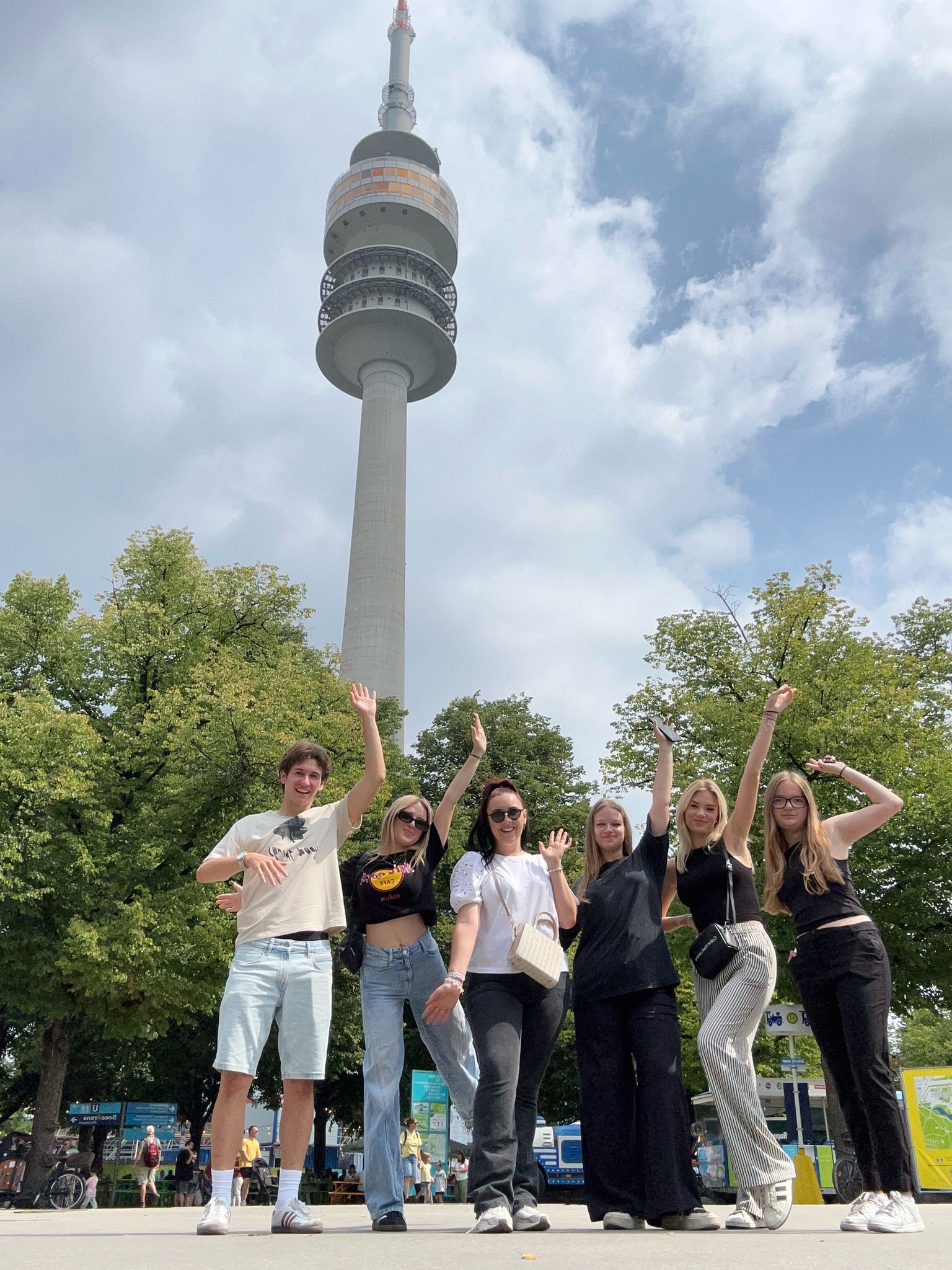
From Salzburg, we continued to Munich, a city that offered us an entirely new energy. There, we visited Marienplatz, watched the famous Glockenspiel, walked through the shops, and explored the city’s districts. We also visited the zoo, the Frauenkirche, the Isar River, Olympiapark and the Olympiaturm, and part of the group also went to the Allianz Arena and the FC Bayern Munich museum. Munich was particularly interesting to us because it brought together urban dynamism, sport, culture and the everyday life of a major German city, but also because it was there that, as a group, we had time for socialising, conversation and shared evenings.
After Munich, we arrived in Zurich. The journey through Switzerland was an experience in itself, as mountain peaks, green meadows, villages and lakes passed by outside the train window. In Zurich, we first went to Lake Zurich, where part of the group took the opportunity to swim, while the rest went for a walk and observed the city. Afterwards, we explored the historic centre, the old streets, churches such as the Grossmünster, and the view over the River Limmat. Zurich remained in our memory as a very orderly, calm and elegant city, but also as a place where it is clearly visible how nature and an urban environment can function together.
Tena, Mia, Magdalena, Petra and Andrej | DiscoverEU
“Although the route in the application ended with the return to Zagreb, our journey in practice was extended towards Italy.”
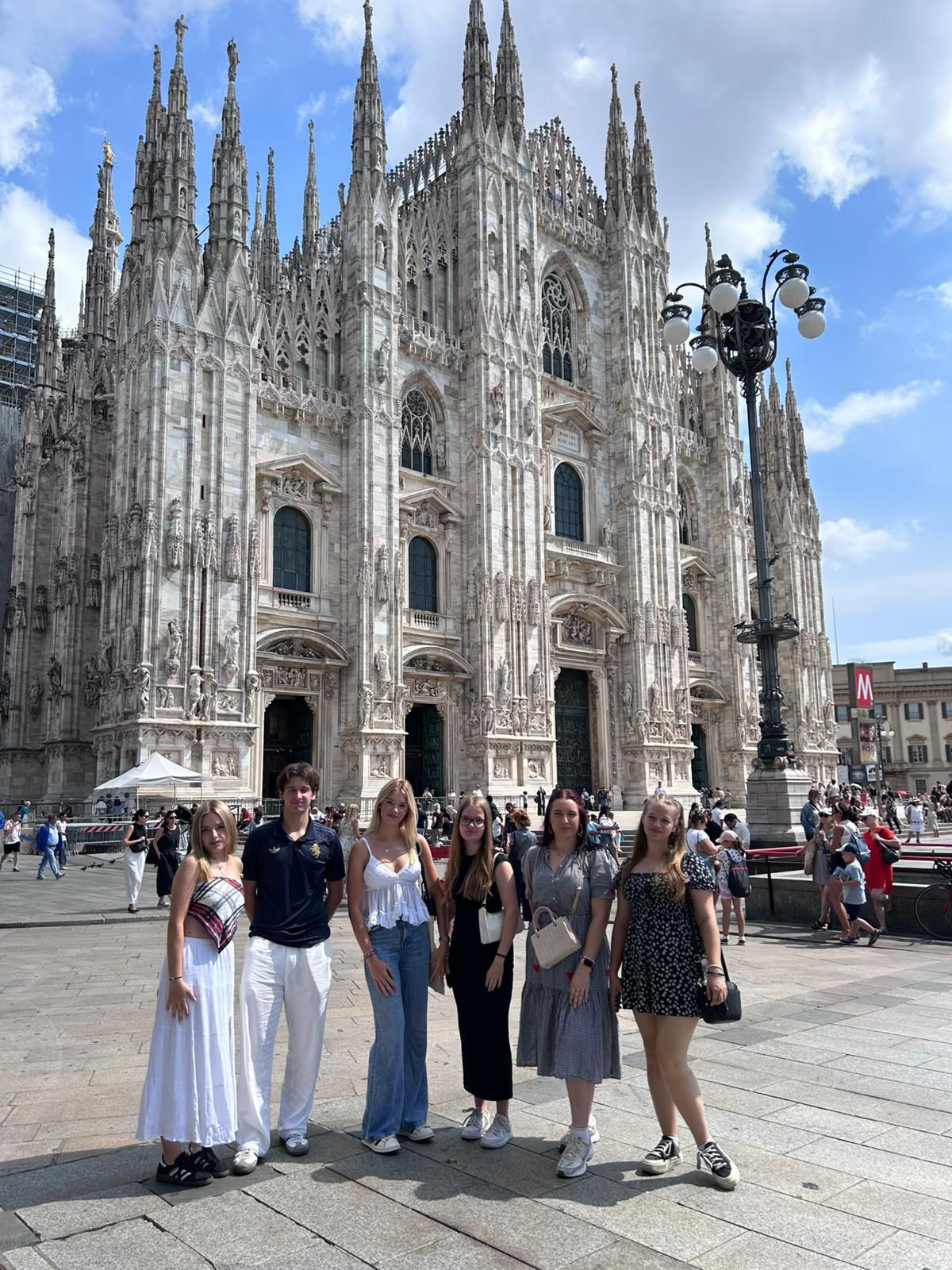
We first arrived in Milan, where we felt a completely different atmosphere. There, we visited the magnificent Duomo and the Museo del Duomo, walked through the city centre, explored its streets, squares and shops, and absorbed the rhythm of a city that is at once modern, elegant and strongly marked by its own history. Although the weather in Milan surprised us twice with storms, that did not diminish the experience. On the contrary, those unplanned moments further shaped our shared experience, because even in the hostels, with films, board games and conversations, we continued to build the atmosphere of the group.
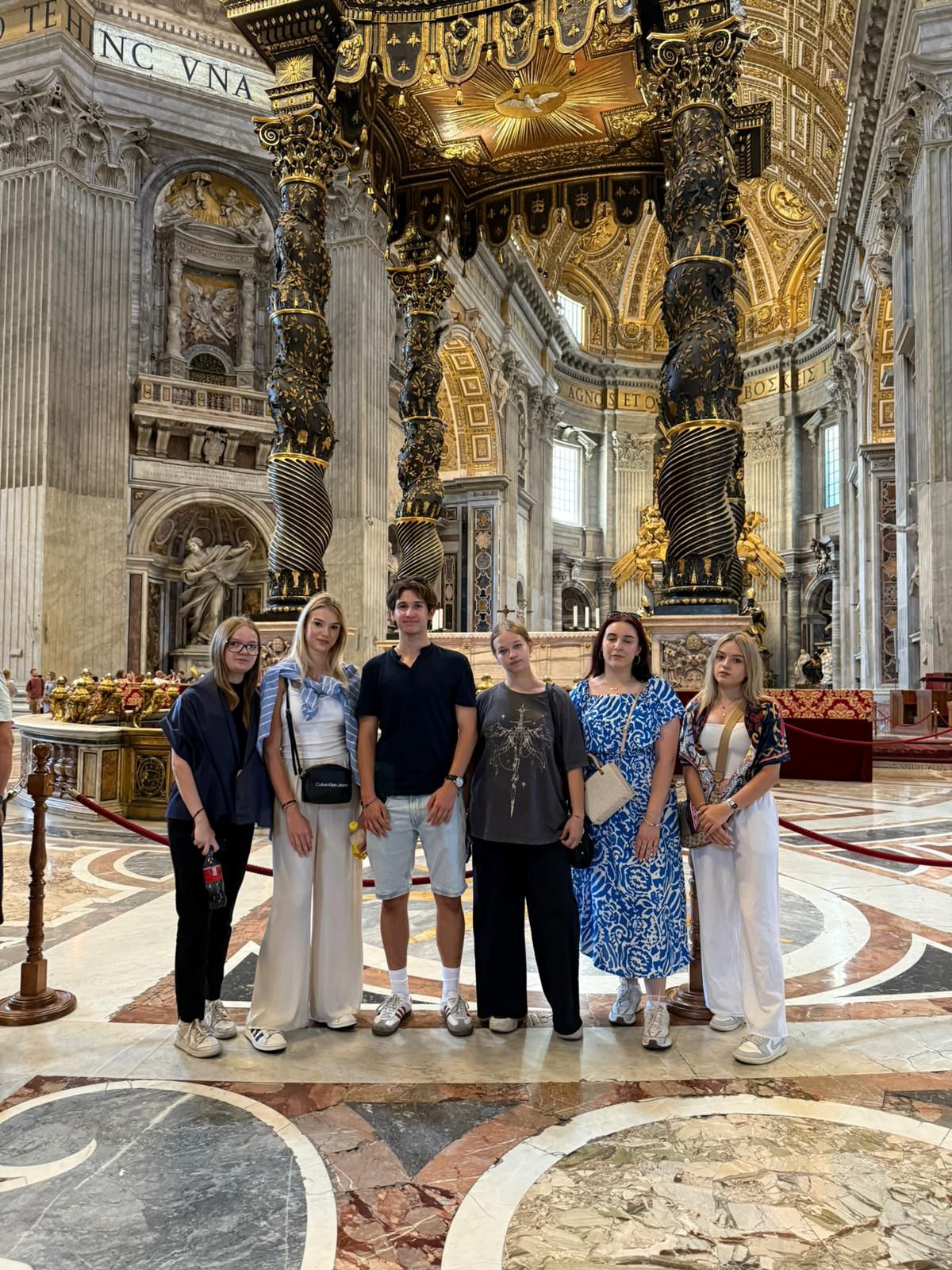
The final part of our journey took us to Rome. As soon as we arrived, we felt that we were entering a city that carries a special historical and cultural layer of Europe. We tasted Italian pizza and pasta, explored the city’s streets, shops and squares, and in the following days visited some of its most famous places. One particularly strong impression was our early morning walk to the Trevi Fountain, when we experienced it in silence and without the usual crowds. We visited the Colosseum, the Vittoriano, the Pantheon, the Spanish Steps, and many streets filled with music, fountains and evening atmosphere. In Rome, we also visited the Vatican, St Peter’s Square and St Peter’s Basilica, where we admired the architecture, the details, and the impression of a space that brings together visitors from all over the world.
For us, this journey was not simply a series of cities visited, but a genuine experience of learning through movement, observation and living together on the road. Through Alpine landscapes, city centres, museums, parks, churches, stadiums, lakes and squares, we learned about the different faces of Europe. At the same time, we also learned about ourselves, about how to manage in new places, how to plan, adapt, make decisions as a group, and share responsibility. That was precisely the essence of “Alpine Odyssey”: to bring us closer to the Alpine region, its natural and cultural particularities, while also showing how sustainable travel, openness to diversity and shared experience are an important part of European learning. In the application form, this route was envisaged precisely as a journey combining nature, culture, urban life and awareness of sustainable tourism, and in reality it brought us much more than that.
The group returned home safely with memories for a lifetime, and this journey will remain one of those experiences remembered not only for the destinations, but also for the feeling of togetherness, freedom and discovering Europe through our own steps.
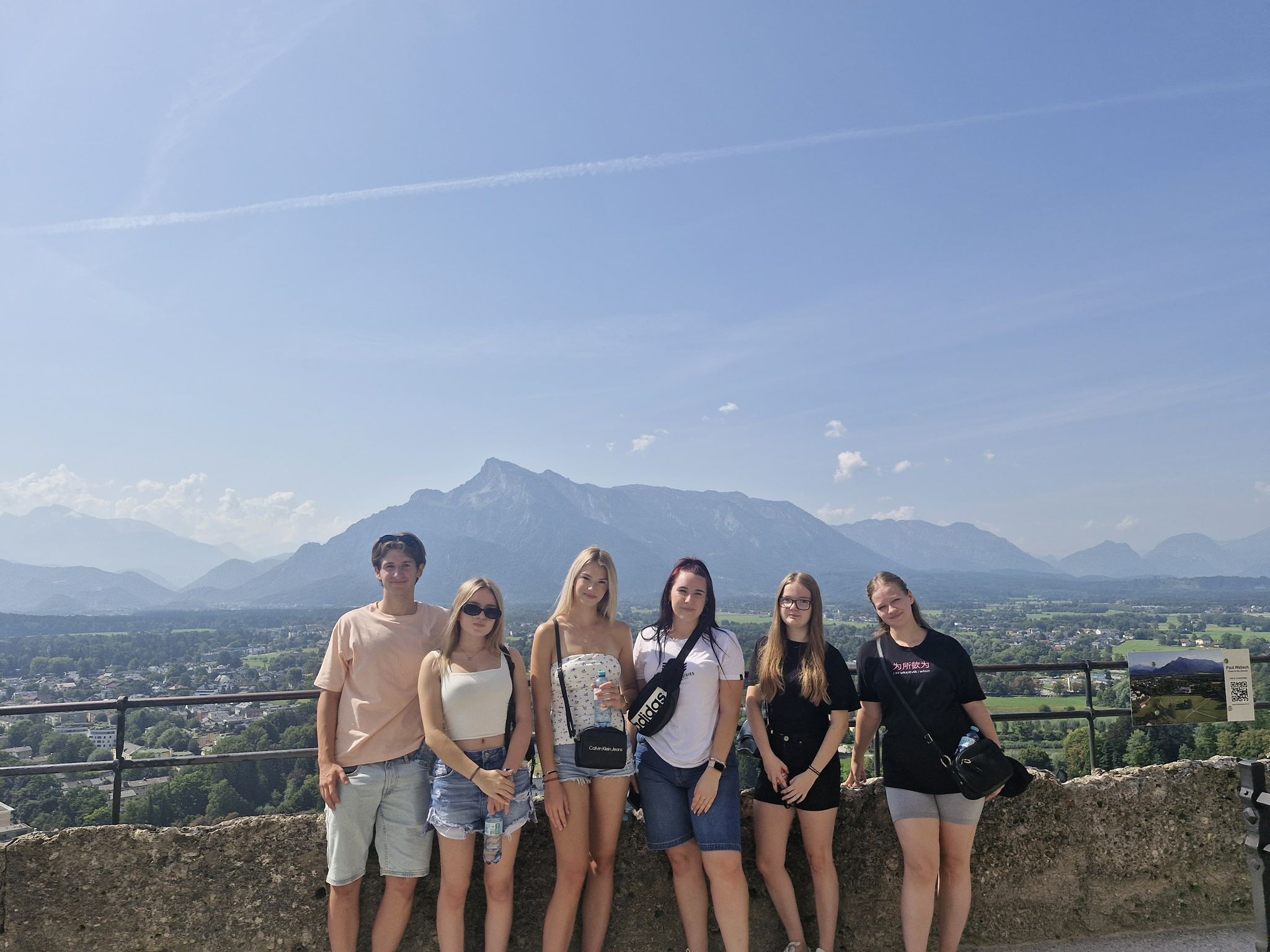
Tena, Mia, Magdalena, Petra and Andrej | DiscoverEU
Source:
SUMA Association