“Vienna showed us how imperial history, monumental architecture, museums, public space and the rhythm of a contemporary city can coexist in one place.”
We are Ivan, Ema, Ana, Nika and Mia, and on our journey we were accompanied by our group leader, Sara. Together, we took part in the activity “Central European Mosaic”, one of five thematic routes within the project “Diversity Express vol. 2: Where Tracks Lead, Stories Follow”, implemented by SUMA – Association for Sustainable Development within Erasmus+ KA155-YOU DiscoverEU Inclusion Action. In the application form, this activity was planned as a 12-day journey from 1 to 12 August 2025 on the route Zagreb – Vienna – Bratislava – Budapest – Prague – Zagreb, with an emphasis on understanding the shared history and cultural interconnectedness of Central European countries, becoming familiar with the architectural styles and traditions of the region, and learning through visits to historical landmarks, discussions and daily reflection. During the implementation itself, we further enriched our route with Graz, so that over the course of twelve days we travelled through Austria, Slovakia, the Czech Republic and Hungary, visiting Graz, Vienna, Bratislava, Prague and Budapest.
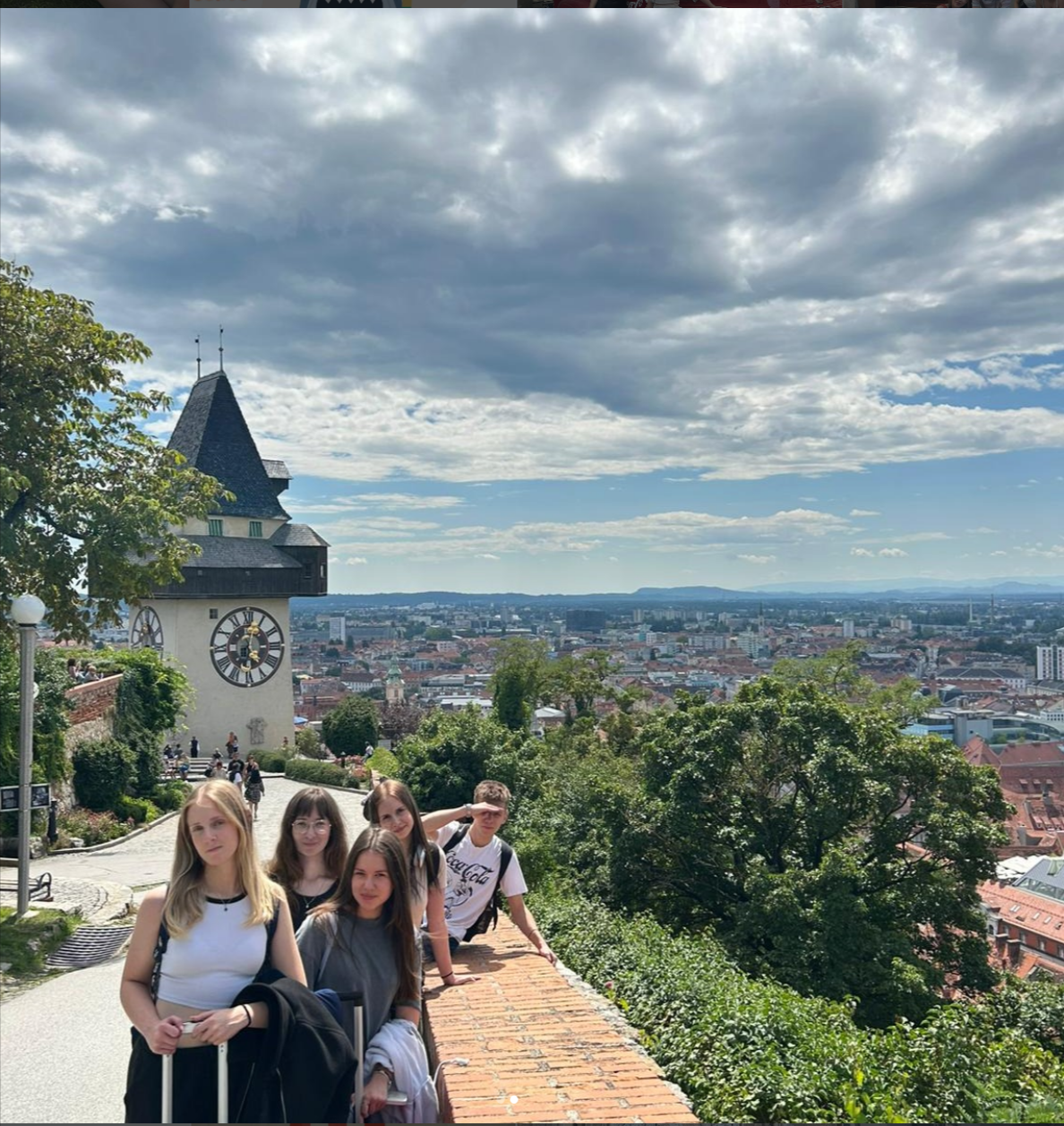
Our journey began with our departure from Zagreb to Graz. There, we took the funicular up to the fortress and visited the famous Uhrturm, which offers a lovely view over the city. After a short visit, we continued to Vienna, where we arrived in the evening and settled into our apartment. The very first day already showed us what would characterise the whole journey: constant movement, changing landscapes, encounters with different cities, and the feeling that Europe was unfolding before us like a mosaic made up of history, architecture, languages and everyday scenes.
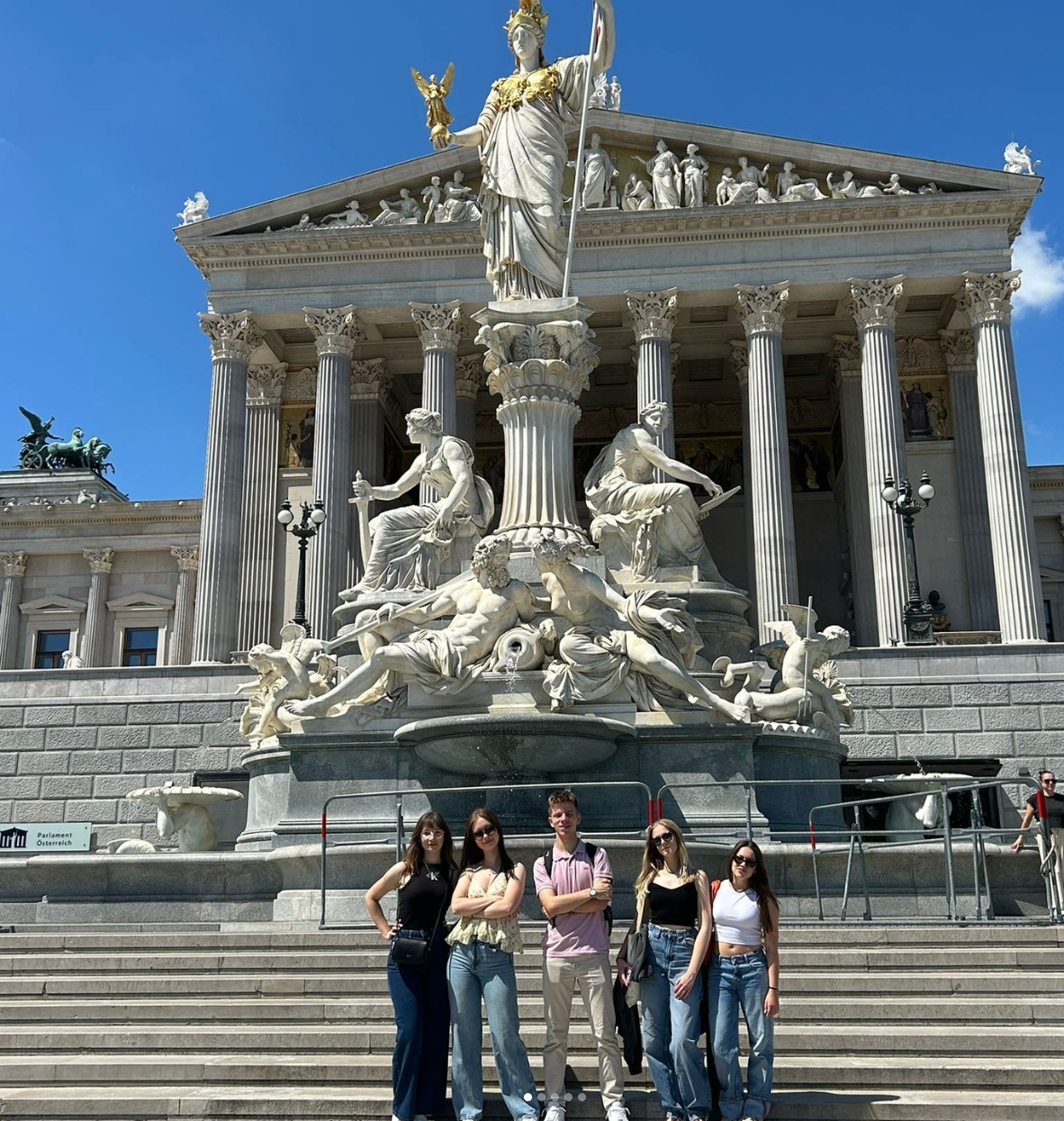
We spent several days in Vienna, and that part of the route gave us a strong sense of just how layered and rich the Central European space is. We visited Stephansplatz and St Stephen’s Cathedral, Karlsplatz and Karlskirche, passed by the Vienna State Opera, Parliament and the Hofburg, and walked along Mariahilfer Straße. In the following days, we also visited Schönbrunn Palace, its gardens, and the magnificent architecture that left a strong impression on the whole group. We visited the Museum of Military History, Schloss Belvedere and the Wien Museum, and spent one day in the Prater, where we combined fun and sightseeing. There, we visited Madame Tussauds, enjoyed the rides, and at the end of the day experienced Vienna from above on the famous Wiener Riesenrad. Vienna showed us how imperial history, monumental architecture, museums, public space and the rhythm of a contemporary city can coexist in one place.
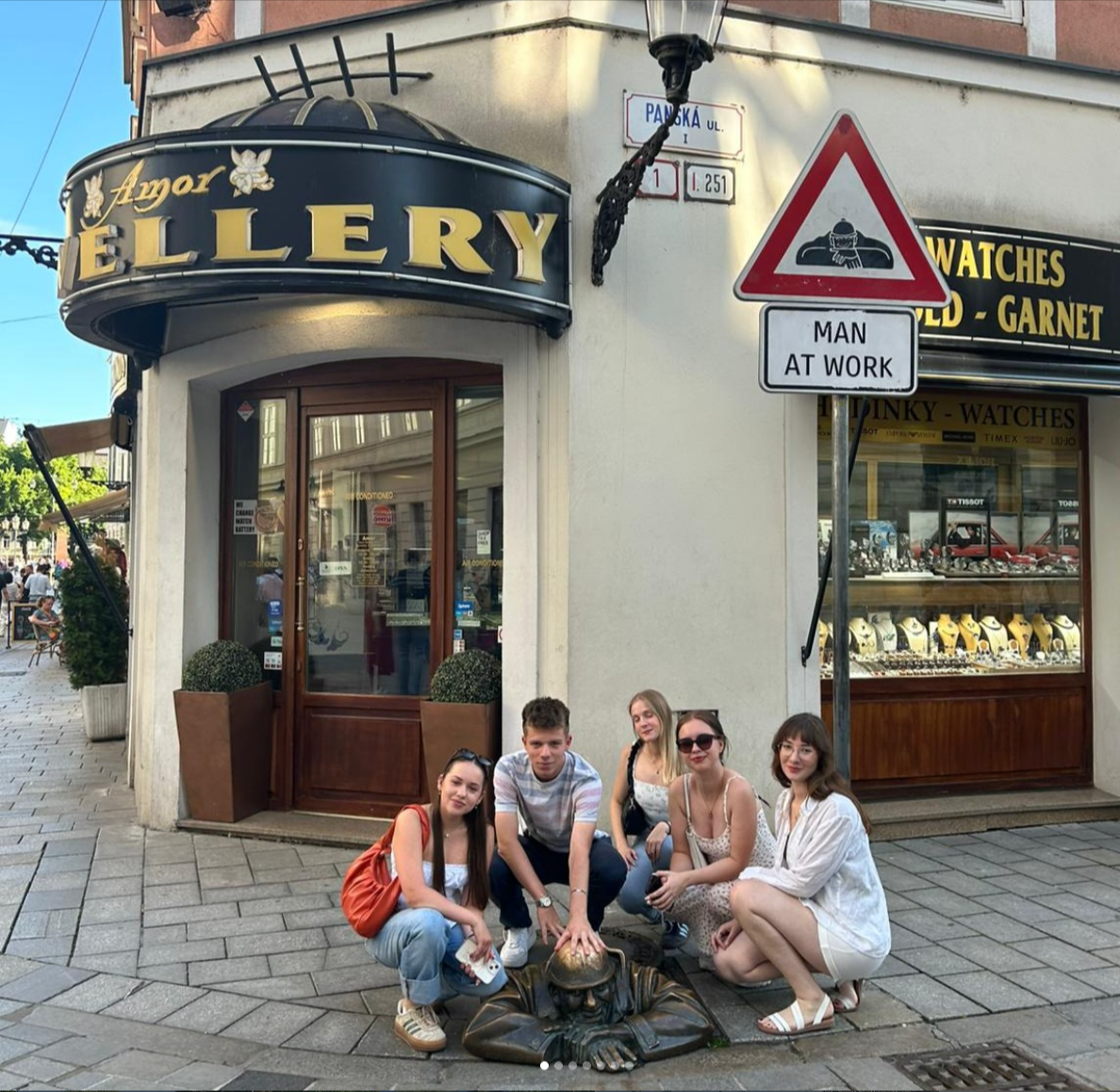
From Vienna, we continued to Bratislava. Although our stay there was shorter, it left a very pleasant impression. Upon arrival, we walked through the city centre, passed historic buildings and absorbed a more relaxed atmosphere than in the larger capitals. Before leaving Bratislava, we also managed to visit Eurovea by the Danube, which was a welcome opportunity for a gentle walk and a short break before continuing the journey. It was precisely such transitions between different cities and their rhythms that helped us feel even more clearly both the differences and the connections within the Central European area.
Ivan, Ema, Ana, Nika and Mia | DiscoverEU
“The next major stop was Prague.”
We spent several days there, and the city won us over with its combination of historical splendour, symbolism and everyday life. We visited the Old Town Square and watched the famous astronomical clock, walked by the river and across the city’s bridges, saw the rotating head of Franz Kafka and the unusual Dancing House, and experienced one part of the city from a small boat. Later, we explored the old part of the city, its cathedrals, historic castles, and the Petřín Tower, which offers a view across the whole of Prague. We also visited Charles Bridge and the John Lennon Wall, a place that carries messages of peace, memory and creative expression. One day we spent more leisurely, with a shopping centre, a visit to the Museum of Alchemists, and an evening in Riegrovy Sady park, where we watched the sunset over the city during a picnic. Prague was particularly important to us because it clearly embodied the idea of a Central European mosaic: a city where history, legend, art, tourism and contemporary urban life meet.
From Prague, we set off early in the morning for Budapest. After a longer journey, we arrived in the city and settled in, and the following day devoted ourselves to exploring it in greater detail. We got on a hop-on, hop-off bus and spent much of the day visiting the city and its landmarks. Part of the tour also included a cruise on the Danube, which allowed us to experience Budapest from a different perspective. We visited the central market, walked among the stalls, absorbed the atmosphere of the city, and saw many of the well-known places that make Budapest so recognisable. We spent the final day of the journey doing a little more sightseeing before heading to the railway station and setting off back to Croatia.
For us, this journey was not merely a series of sightseeing visits, but a genuine experience of getting to know Central Europe through its cities, history, architecture and everyday life. Each city showed us a different face of the region: from imperial Vienna and calmer Bratislava, through enchanting Prague, to magnificent Budapest, while Graz served as our first introduction to the space that accompanied us throughout the whole route. Through trains, railway stations, walks, museums, parks, squares and conversations, we learned how Central European identity is made up of many layers, influences and experiences. At the same time, we also learned about ourselves: how to manage in new cities, how to travel together, adapt to changes, share responsibility and create common memories. That was precisely the point of the activity “Central European Mosaic”: through the real experience of travel, to help us better understand the shared history and cultural interconnectedness of the region, but also to experience Europe as a space of encounters, diversity and connection.
We brought home many memories, beautiful moments and experiences that we will remember for a long time, and this journey will remain one of those experiences that is measured not only by the number of cities and kilometres, but by the feeling that we truly passed through them and learned something important.
Ivan, Ema, Ana, Nika and Mia | DiscoverEU
Source:
SUMA Association