“Our journey began on 22 August 2024 with our departure from Koprivnica for Budapest.”
We are Iva, Jakob, Lucija Liubov and Tea, and on our journey we were accompanied by our group leader, Melissa. Together, we took part in the activity “Diversity Through the Lens – A European Cinematic Collage”, one of four thematic routes within the project “Diversity Express: Connecting People and Cultures”, implemented by SUMA – Association for Sustainable Development within Erasmus+ KA155-YOU DiscoverEU Inclusion Action. In the application form, this activity was planned as a 15-day journey from 22 August to 5 September 2024 on the route Zagreb – Budapest – Kraków – Bratislava – Zagreb, with an emphasis on exploring the richness of European film heritage, understanding the importance of film for European identity, and critically evaluating cinematic works. The journey was conceived through visits to filming locations, cinemas, screenings, discussions, travel diaries and daily meetings, and the application itself also made it clear that participants could adapt the route plan to their own interests, following the so-called circular logic of travel.
In practice, our journey truly took on the shape of a real European cinematic collage. In addition to the cities envisaged in the basic route, during implementation we extended the trip to Prague and Vienna, so that across several countries and cities we encountered not only different cinematic references, but also the broader cultural space of Central Europe. It was precisely this possibility of adaptation that gave our journey extra vitality and a personal character, because we did not simply follow a predetermined route, but shaped it through our own interests, impressions and decisions along the way.
Our journey began on 22 August 2024 with our departure from Koprivnica for Budapest. We arrived in the city late in the evening, and the very next morning set out early to explore it. Walking through the main streets of Budapest, we were impressed by the city’s architecture, and we found it especially interesting that we visited the Hungarian State Opera, associated with the film Red Sparrow. Right at the beginning of the journey, we felt that the film theme did not mean only watching films, but also discovering places, buildings and urban settings that form part of the European cinematic imagination.
From Budapest, we continued to Bratislava. There, we first rested in the hostel and then went for an evening walk through the city. We saw the Slovak National Theatre, walked along the Danube, and visited a horror museum, which added a small dose of genre playfulness to our route. The following day, because of poorer weather, we spent part of our time in the Aupark shopping centre, visited a cinema, and became even more confident in using public transport. Bratislava remained in our memory as a tidy, pleasant and easily walkable city, in which we felt how film and urban everyday life can merge into a calmer, but very interesting experience.
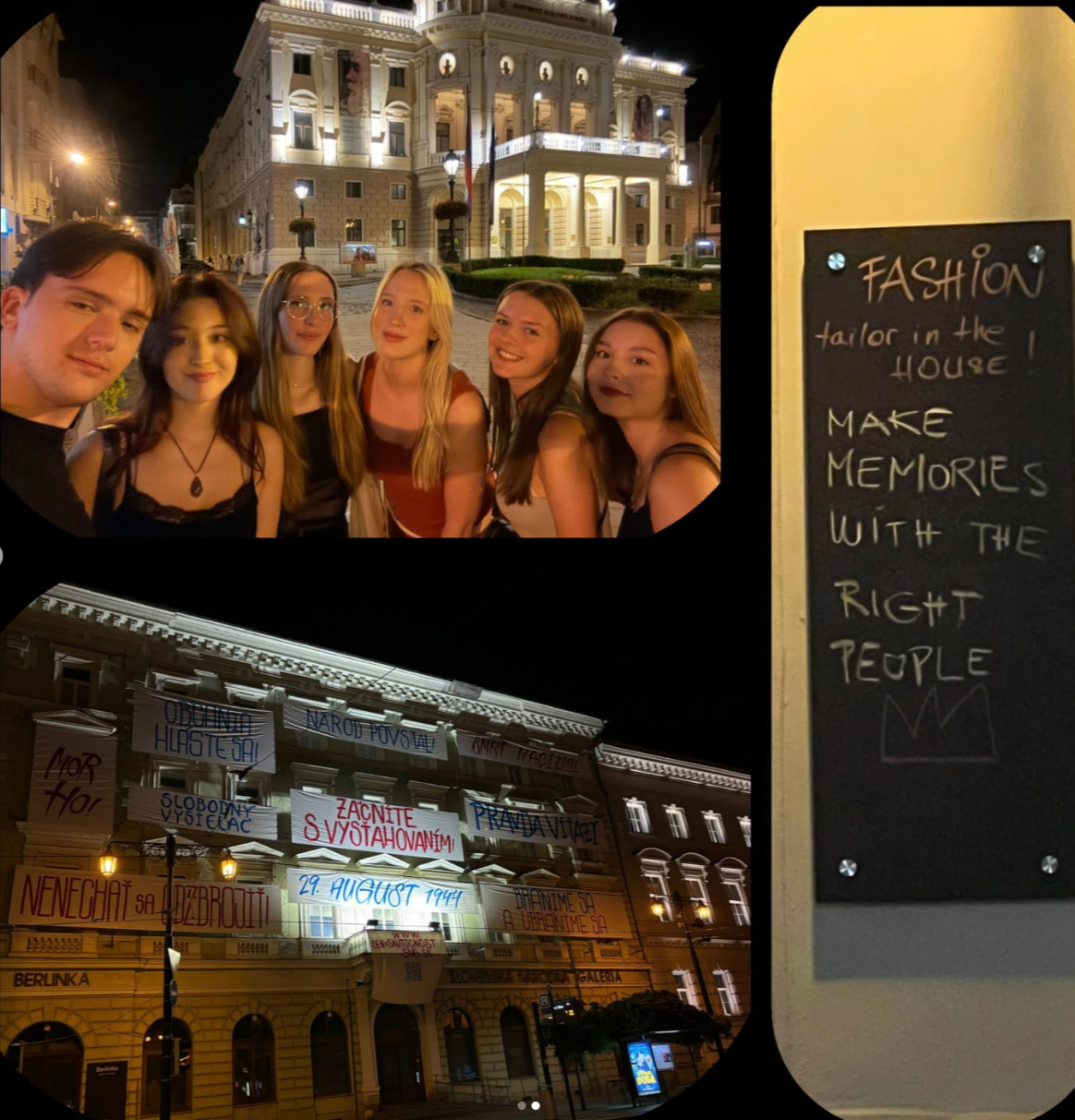
Iva, Jakob, Lucija Liubov and Tea | DiscoverEU
“After that came Kraków, one of the key cities on our route.”
After arriving following a longer journey, we first rested and then set out to explore the city. We walked across the main square, saw St Mary’s Basilica, strolled along the Vistula, and visited the Old National Theatre and the Juliusz Słowacki Theatre. In the following days, we continued to explore the city, including Galeria Krakowska and the city parks, but one of the most powerful moments was our visit to Schindler’s Factory Museum. This visit was especially meaningful for us because we connected it with the film Schindler’s List, but also with the broader historical themes carried by that place. Although emotionally difficult in content, the museum deeply affected us through its concept and the way it conveys the experience of a particular time. Later, we took a boat ride on the Vistula and continued to discover the city through its flavours, spaces and atmosphere.
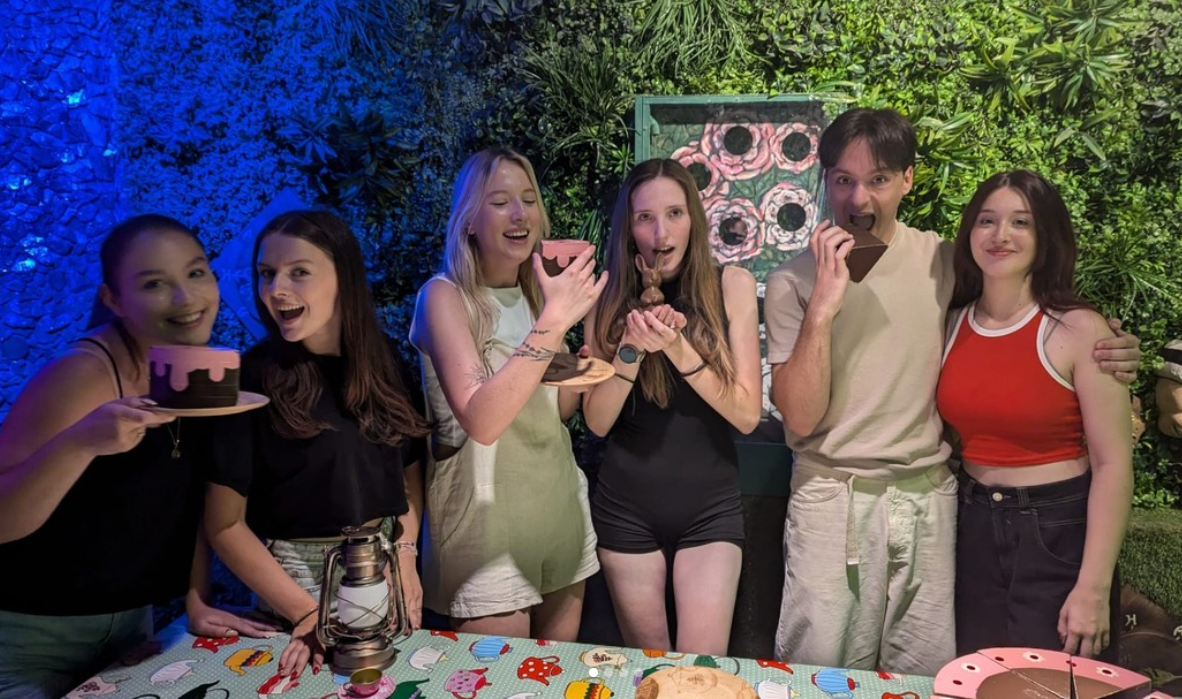
From Kraków, we continued to Prague, which gave our route a new dimension. Upon arrival, we settled in and decided to experience the city in its evening atmosphere as well. The following day, we visited Charles Bridge, the Jewish Quarter, St Vitus Cathedral and the Old Town Square. Prague won us over with its historical atmosphere and visual layering, almost like a film set that tells a story on its own. We also visited the Museum of Senses, which we found unexpectedly interesting, and a particularly fun part of the day was an escape room themed around Wonderland, where teamwork was essential for solving the puzzles. This part of the journey showed us further how the cinematic and narrative dimension can also be explored through interactive experiences, and not only through traditional cultural institutions.
The final part of our journey took us to Vienna. Upon arrival, we first stopped for a short lunch and then began exploring the city. We visited Karlskirche, St Stephen’s Cathedral, the Belvedere and the Vienna State Opera, and on the first day also went to an escape room themed “The Phantom”, which fitted perfectly into the cinematic logic of our journey. We also walked along the Danube, stopped at a Yugoslav-themed café, and left part of the city for the following day. Then we continued sightseeing with Schönbrunn and once again felt how Vienna, as a city of strong cultural and visual tradition, rounded off our cinematic collage perfectly. In it, history, art, theatre, architecture and urban life came together, just as they had throughout our journey.
For us, this journey was not simply a sequence of cities and landmarks. It was an experience of learning through movement, observation, conversation and joint decision-making. Through Budapest, Bratislava, Kraków, Prague and Vienna, we encountered different cultural and cinematic references, but also the broader European space that film shapes and reflects. In the project logic itself, this route was conceived precisely as an immersion in the world of European cinema and an understanding of its influence on culture and society, but in reality it brought us much more than that: independence, teamwork, resourcefulness, openness to new experiences, and the feeling that we can experience and understand Europe through our own steps. The project “Diversity Express: Connecting People and Cultures” was aimed precisely at young people with fewer opportunities, at the development of intercultural skills, a sense of European identity, and an inclusive travel experience, and this journey became a very concrete example of that for us.
We returned home full of impressions, with many memories and with the feeling that through this journey we had truly assembled our own European cinematic collage, not only from cities and locations, but also from encounters, conversations, images and experiences that we will remember for a long time.
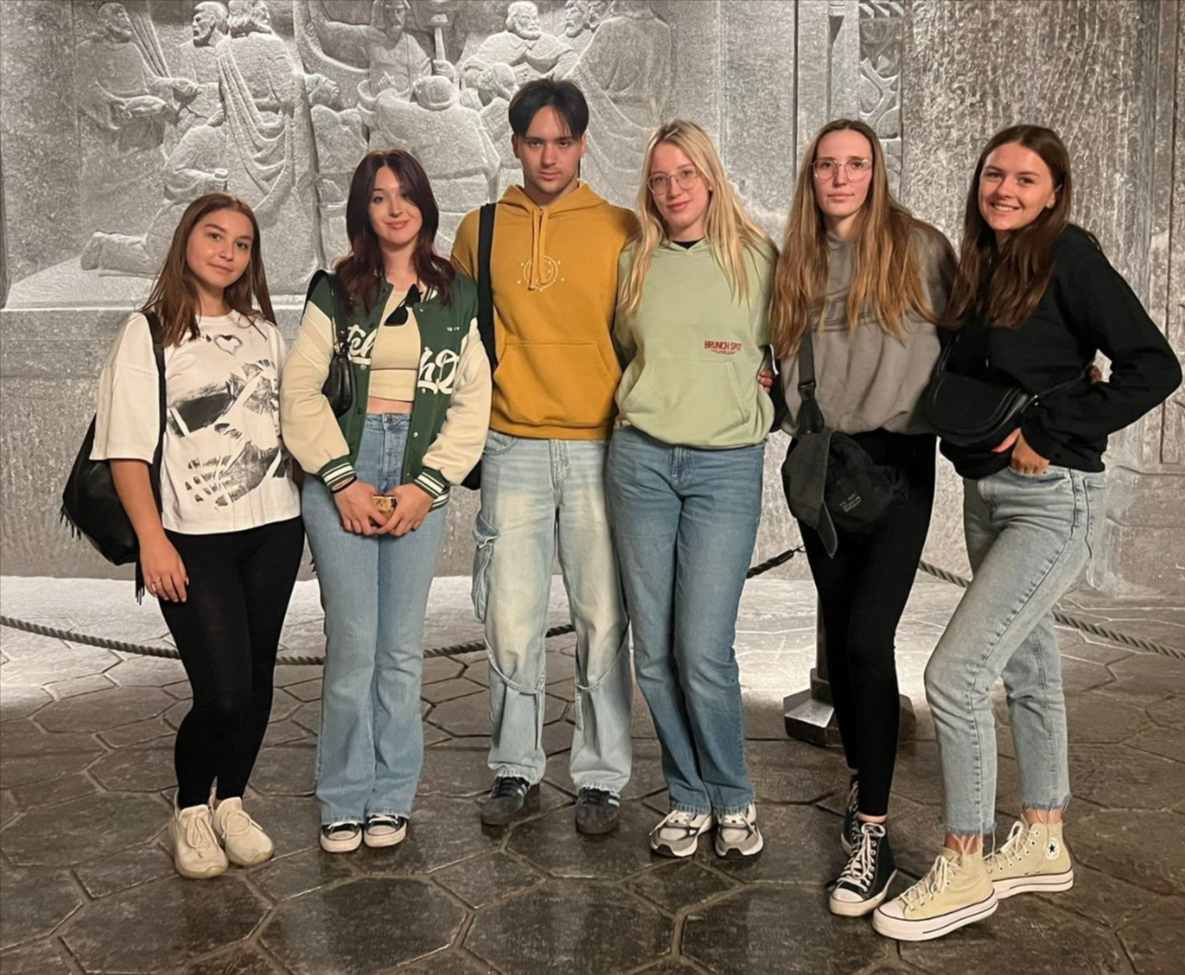
Iva, Jakob, Lucija Liubov and Tea | DiscoverEU
Source:
SUMA Association