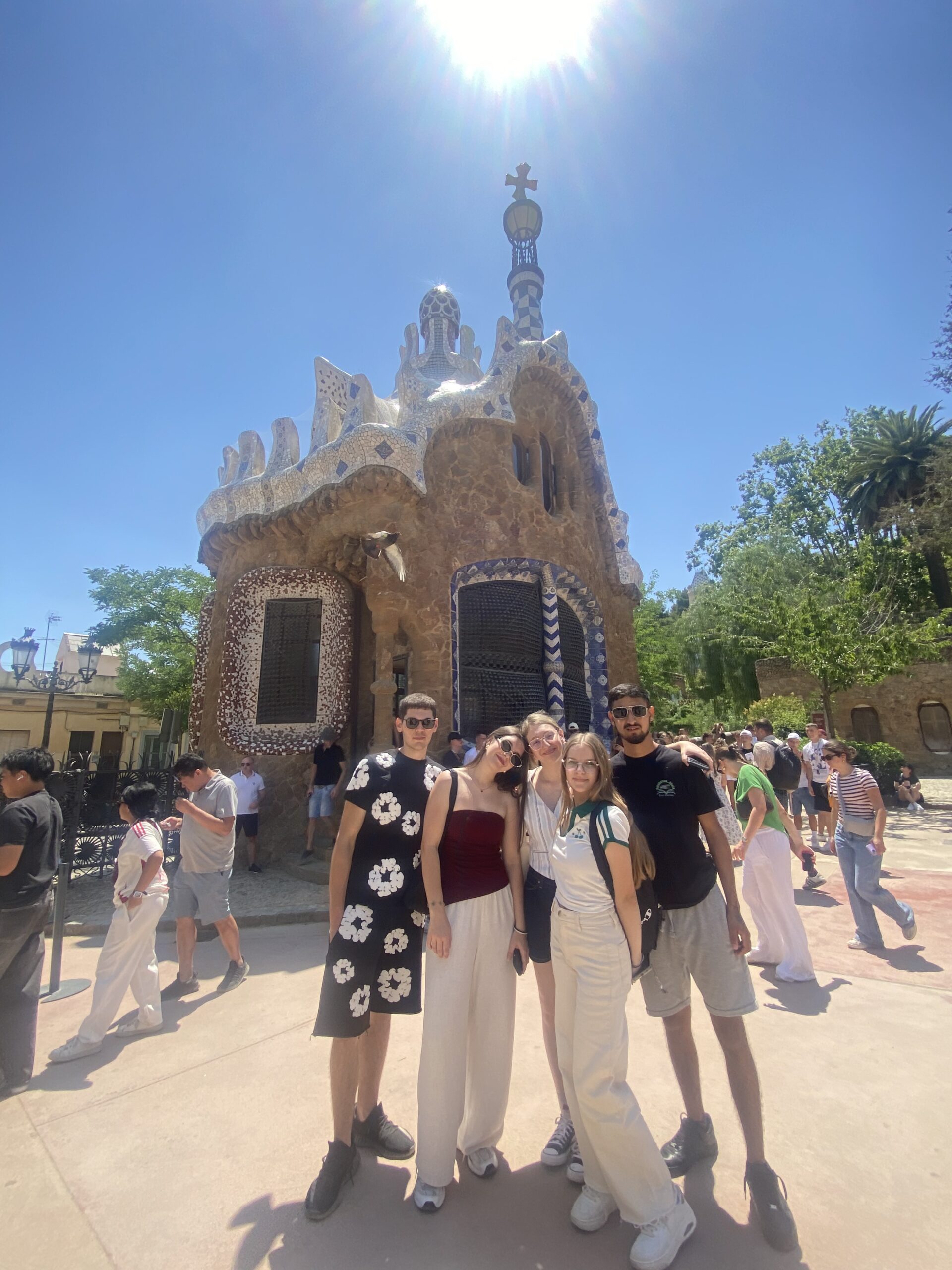
“We visited the Sagrada Família and Park Güell, where we were amazed by the architecture and the view over the city, and then also the FC Barcelona museum.”
We are Lorena, Samanta, David, Julija and Ivan, and on our journey we were accompanied by our group leader, Gabrijela. Together, we took part in the activity “European Sporting History”, one of five thematic routes within the project “Diversity Express vol. 2: Where Tracks Lead, Stories Follow”, implemented by SUMA – Association for Sustainable Development within Erasmus+ KA155-YOU DiscoverEU Inclusion Action. In the application form, this activity was planned as a 12-day journey from 1 to 12 July 2025 on the route Zagreb – Munich – Paris – Barcelona – Zagreb, with an emphasis on understanding European sporting history, the role of sport in European identity, and the significance of the Olympic Games for European cities. During the implementation itself, we expanded our route further, so that in addition to the planned cities, we also visited Marseille, Nice, Monte Carlo and Verona.
Our journey began with our departure from Zagreb for Munich. The very first day was special, because from the train we watched the landscapes of Slovenia and Austria, feeling that what lay ahead was not only a journey through cities, but also a genuine experience of Europe in motion. In Munich, we learned how to use public transport, explored Marienplatz, visited the Frauenkirche, and climbed the tower of Alter Peter, from which there is a view over the whole city. We also walked through the English Garden, and on the following day visited the Allianz Arena and the FC Bayern Museum, where we also tried our hand at mini football. We visited Olympiapark and the Olympiastadion as well, and it was precisely in Munich that we clearly felt why this city is important for European sporting history, and how sporting infrastructure, urban memory and everyday life can be connected into one whole. In the application, Munich was envisaged precisely as a city offering insight into the Olympic legacy of 1972.
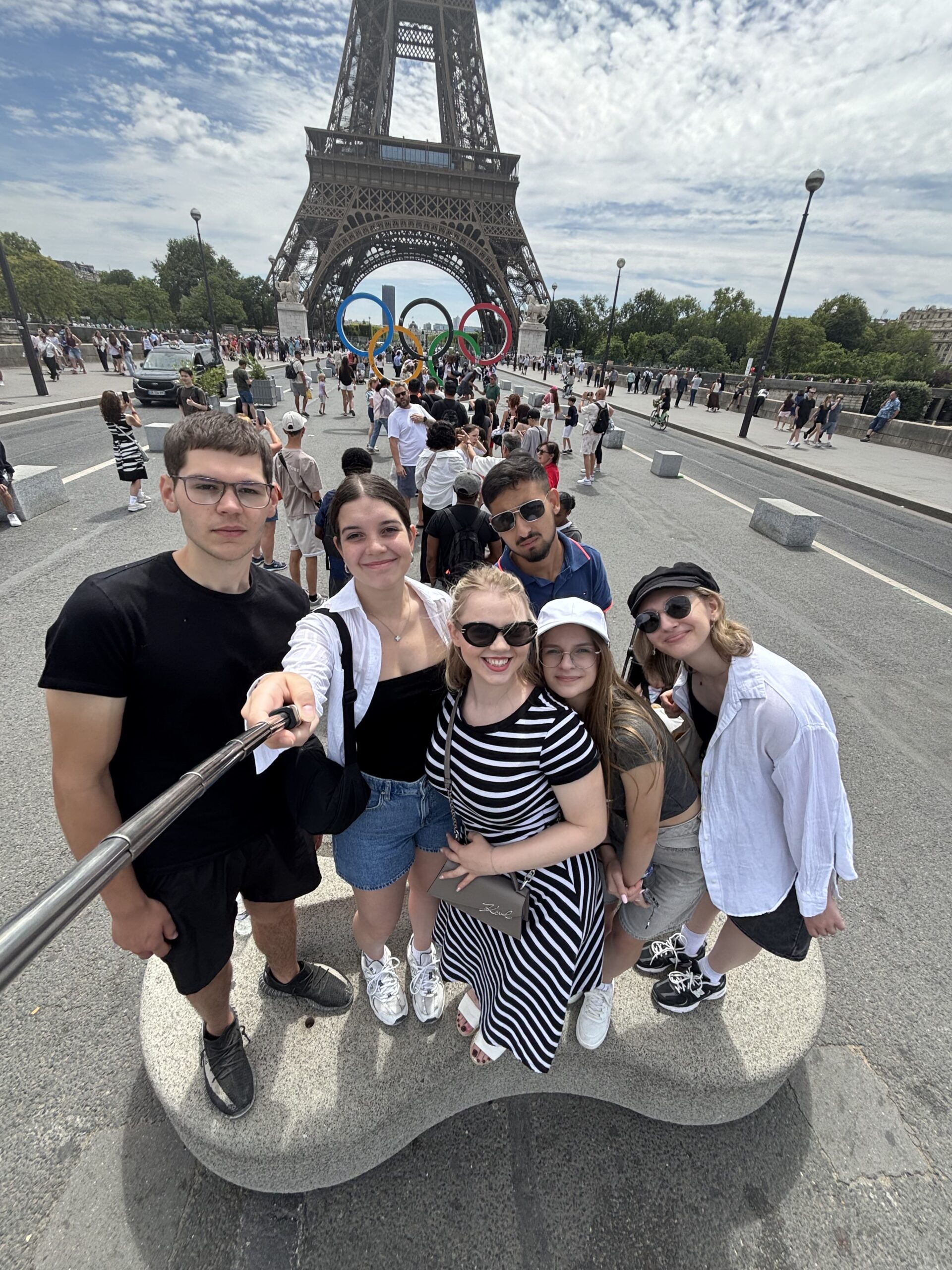
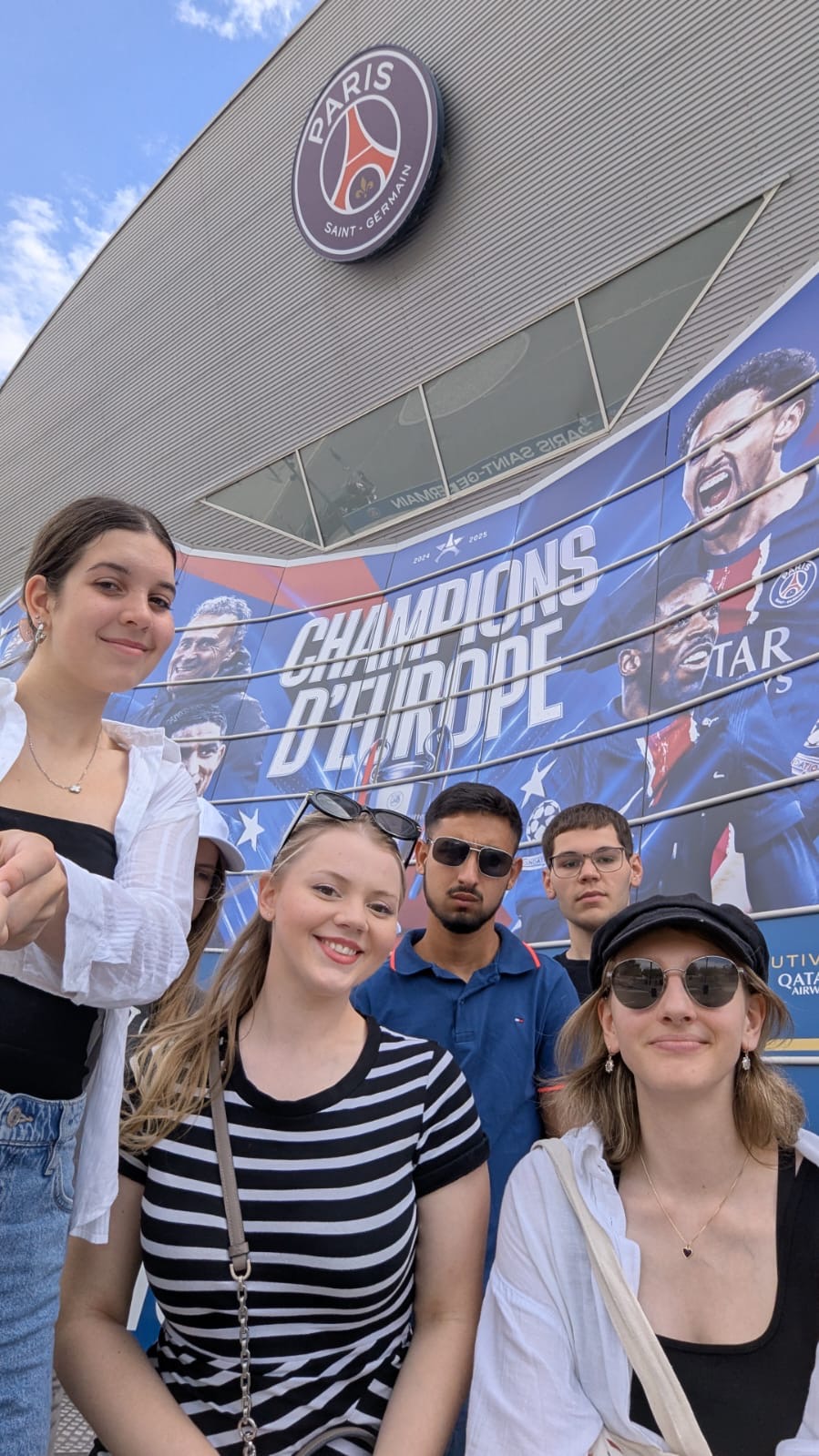
After Munich, we travelled on to Paris. There, we first arrived in Montmartre and continued getting to know the city through its districts, landmarks and atmosphere. We saw Sacré-Cœur, the Wall of Love, Galeries Lafayette and the Louvre, where we spent more than two hours among famous works of art. Although that part of the route was not directly about sport, it showed us how multilayered European cities are and how sport, culture, history and identity cannot always be separated. In the following days, we visited the Eiffel Tower, Parc des Princes, the home of PSG, and the Luxembourg Gardens, where the small sailing boats on the water also reminded us of the sporting spirit of Olympic Paris. We also visited the site of the former Bastille prison, Notre-Dame, and Les Invalides with Napoleon’s tomb. Paris remained particularly vivid in our memory because it combined monumentality, the everyday rhythm of a major city, and a contemporary Olympic legacy. In the application, Paris was identified precisely as the host city of the 2024 Olympic Games.
From Paris, we continued by night train to Barcelona. There, we were greeted by great heat and the energy of the city, which we felt immediately. We visited the Sagrada Família and Park Güell, where we were amazed by the architecture and the view over the city, and then also the FC Barcelona museum. We saw the stadium under renovation as well, which further strengthened the sense that we were in one of Europe’s most important sporting cities. Barcelona was particularly interesting to us because sport there is experienced as part of the city’s identity, rather than merely as competition or entertainment. In the application, Barcelona was presented precisely as a city carrying the legacy of the 1992 Olympic Games.
Lorena, Samanta, David, Julija and Ivan | DiscoverEU
“On the ground, we then extended the route towards the south of France and the Mediterranean region.”
In Marseille and Nice, we continued the journey at a more relaxed pace, but still observing how cities differ in atmosphere, urban life and their relationship to public space. In Nice, we left our luggage at the railway station and then took the train to Monte Carlo, which for many of us was one of the most exciting moments of the entire journey. On the short ride to Monaco, we were accompanied by views of the sea and mountains, and upon arrival we visited the Monte Carlo Casino and the famous Fairmont hairpin bend from Formula 1. In this way, our journey gained yet another sporting dimension, one connected with motor racing, spectacle and globally recognised sporting locations. Some of us also visited the Japanese Garden, and after returning to Nice, some went to the beach, some for a walk, and others to rest.
The final part of our journey took us to Verona. During the ride on public transport through the city, we already felt that we were arriving in a place with a special rhythm and character. After checking in, we went for a late lunch at a restaurant overlooking the Arena, and then visited Juliet’s House and explored the city’s small streets. Verona was different from the other stops on our journey, calmer, more intimate, and in some way symbolic as the end of the whole route. It was there that we felt our journey was naturally drawing to a close.
For us, this journey was not simply a tour of famous cities and sporting locations. It was an experience of learning through movement, finding our way, joint planning, and observing Europe through one particular theme. Through Munich, Paris and Barcelona, we gained a better understanding of how sport shapes the identity of cities and how the Olympic Games leave traces in space, culture and collective memory. Through Marseille, Nice, Monte Carlo and Verona, we also experienced different faces of Europe, from Mediterranean everyday life to the glamour of motor sport and the historical urbanity of an Italian city. At the same time, we also learned about ourselves: how to adapt, make decisions together, travel responsibly and share an experience that is not reduced merely to photographs, but also to real personal growth. That was precisely the core of the activity “European Sporting History”: through train travel, visits, conversations and shared experiences, to understand that sport is not only a game or a result, but an important part of European history, identity and common memory.
Our journey ended with our return home, but the impressions, memories and stories we brought back with us will remain for a long time. In that way, we too slowly brought to a close our own story, written through trains, stadiums, museums, squares, coastlines and great European cities.
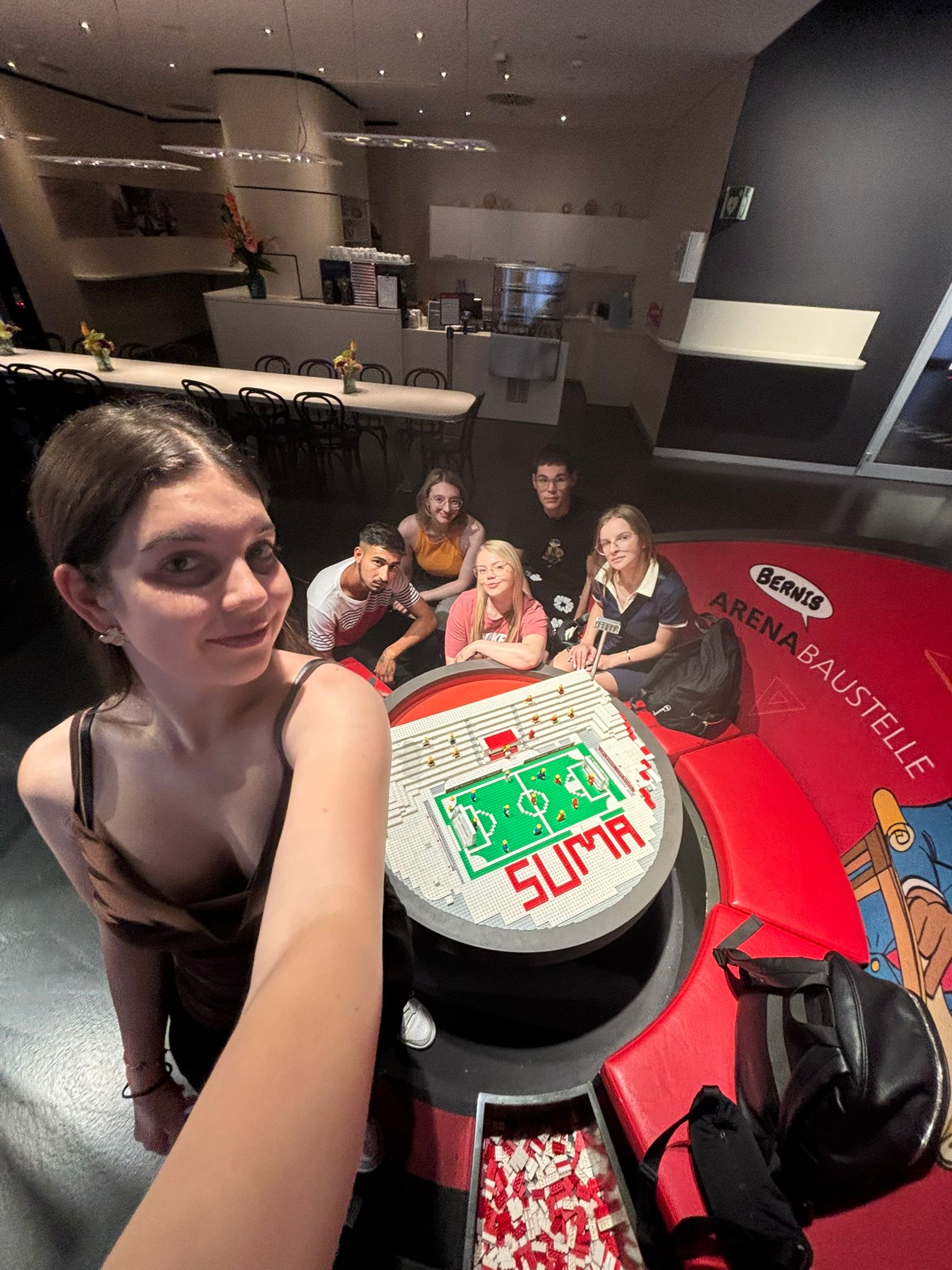
Lorena, Samanta, David, Julija and Ivan | DiscoverEU
Source:
SUMA Association